

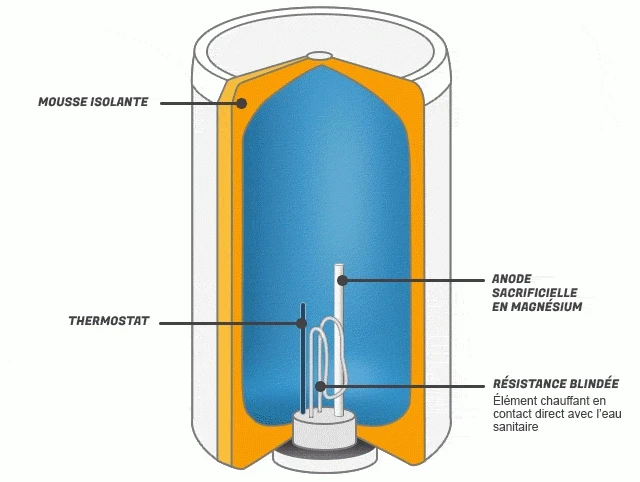
In the field of domestic heating, electric water heaters occupy a central role by ensuring a constant supply of hot water for the daily needs of occupants. These appliances have become essential elements in many households, offering comfort, practicality, and energy efficiency. In this article, we explore the characteristics, advantages, and applications of electric water heaters in the context of domestic heating.
How electric water heaters work
Electric water heaters work by heating water using an integrated electric heating element. Cold water enters the tank through the main inlet, where it is heated by the heating element to reach the desired temperature. Once heated, the water is stored in the thermally insulated tank until it is used. Some models are equipped with thermostats to regulate water temperature, thereby ensuring maximum energy efficiency.
Advantages of electric water heaters
Comfort and practicality: Electric water heaters guarantee a constant supply of hot water, making them ideal for daily needs such as showering, hand washing, and dishwashing.
Versatility: They can be installed in a variety of configurations, including in combination with central heating systems or as standalone hot water sources for specific areas such as bathrooms or kitchens.
Energy efficiency: Thanks to features such as thermal insulation and temperature regulation, electric water heaters can offer high energy efficiency, helping to reduce energy consumption and associated costs.
Reliability: Unlike some alternative heating systems, such as solar water heaters, electric water heaters operate independently of weather conditions, ensuring a constant availability of hot water.
Applications of electric water heaters:
Electric water heaters are widely used in a range of domestic and commercial contexts, including:
Family homes
Apartments and residential buildings
Hotels and tourist complexes
Restaurants and catering establishments
Sports and leisure facilities
With continuous technological advances, electric water heaters are evolving to offer advanced features such as smart connectivity, energy management, and integration into home automation systems. These developments aim to further improve the comfort, reliability, and efficiency of domestic heating systems, thereby helping to create more comfortable, sustainable, and energy-efficient indoor environments.